Language
 EN
 RU
 ES
 DE
 EL
 IT
 JA
 KO
 PT
 ID
 SR
 UK
 VI
 TH
 TR
 MS
 BE
 AR
F300 Solenoid and Piezo Common Rail Injector Tester DRV Valve AHE Waveform Diagnostic
Click the WhatsApp button to chat, or leave a message, and we will contact you within 12 hours.
Details
F300 Solenoid and Piezo common rail injector Tester DRV Valve AHE Waveform Diagnostic
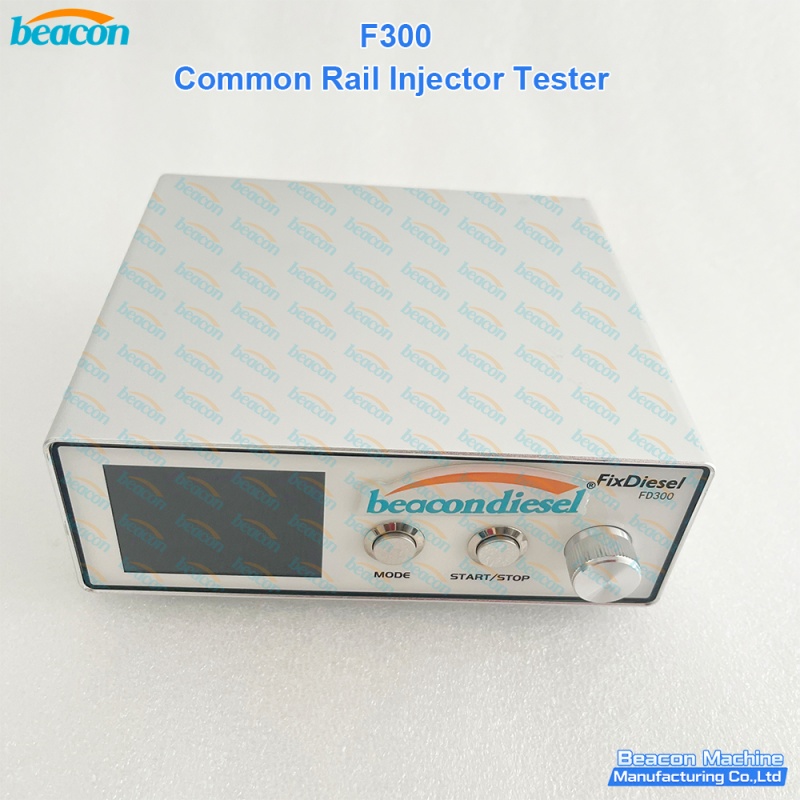
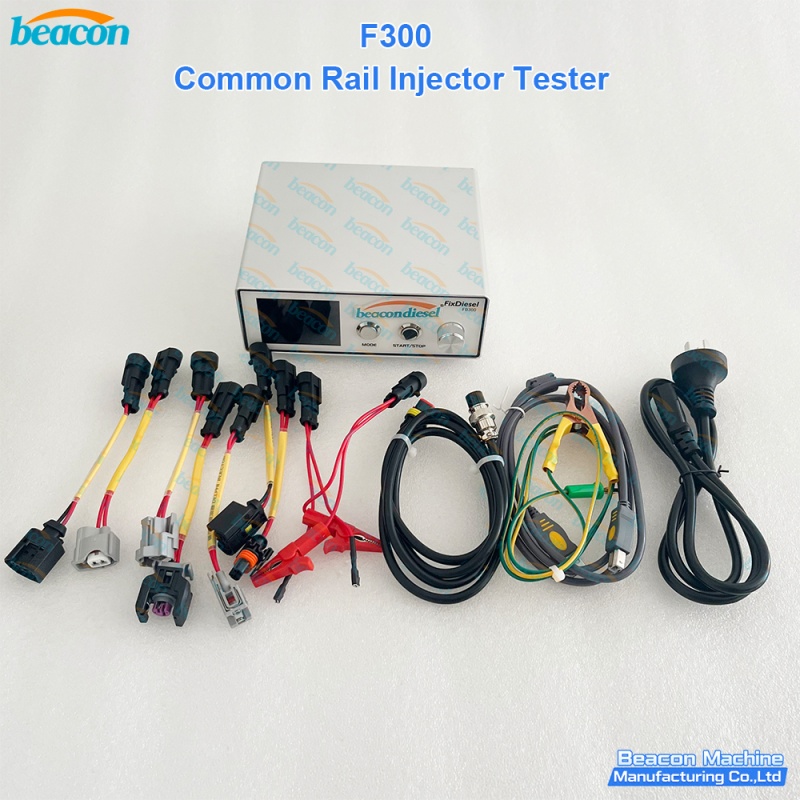
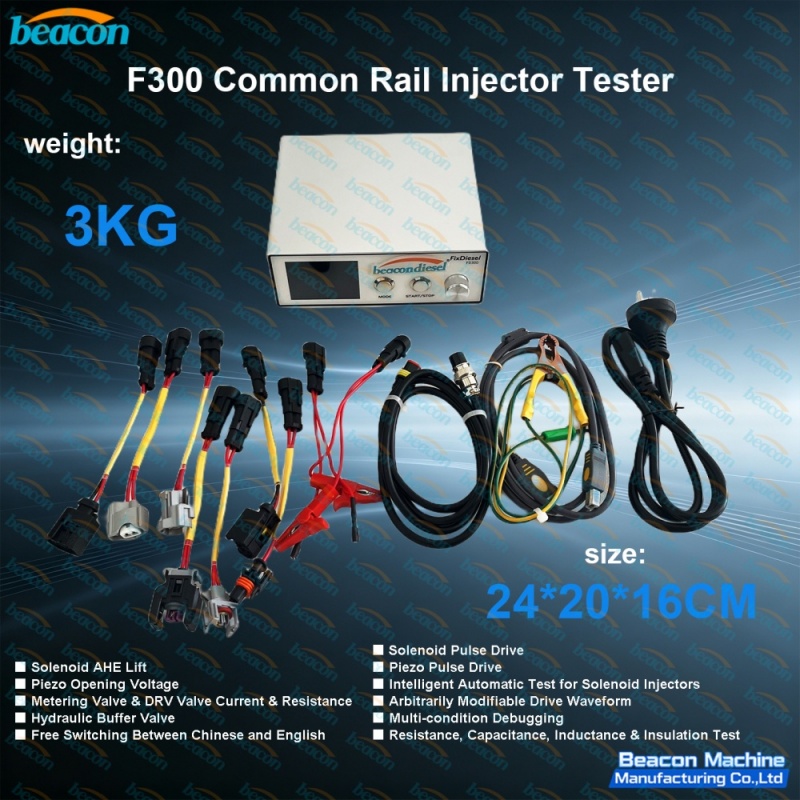
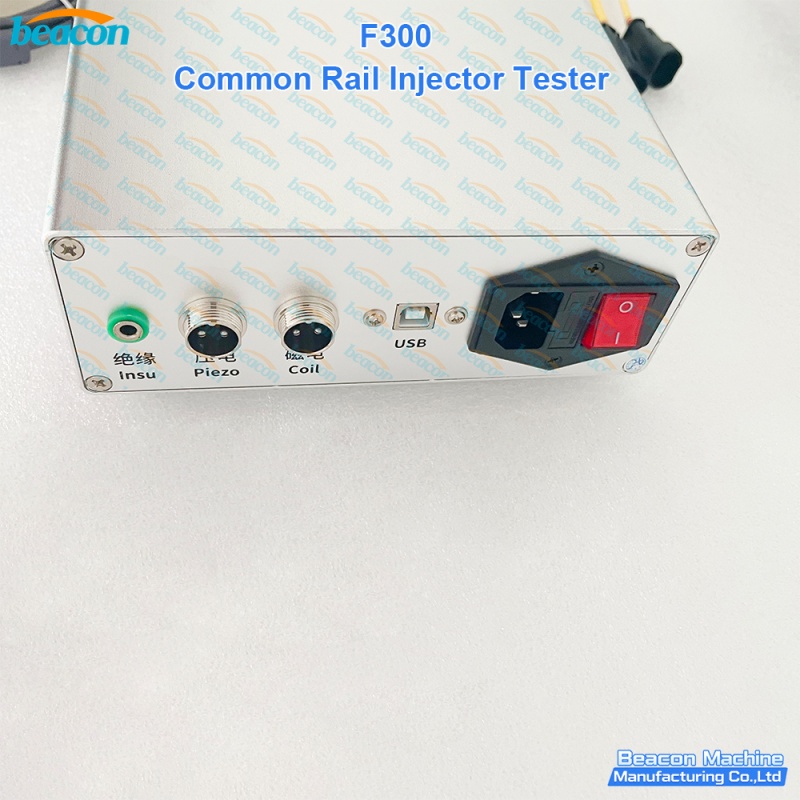
F300 Solenoid and Piezo Common Rail Injector Tester
The F300 is the combined instrument in the Beacon electronic tester range: it drives and measures both solenoid and piezo common rail injectors from a single bench-top unit. Workshops that service mixed fleets usually keep two separate testers, one for coil-type injectors and one for piezo stacks, and then spend time deciding which instrument applies to the injector on the bench. The F300 removes that step. Solenoid pulse drive and piezo pulse drive are both built in, along with the measurement functions each type actually needs.
Both Injector Families in One Unit
Solenoid and piezo injectors are electrically unrelated. A solenoid injector is a coil that responds to current and produces a magnetic field; a piezo injector is a stack of ceramic layers that responds to charge and changes length. A tester built for one type tells you almost nothing useful about the other. The F300 carries both drive stages, so the correct one can be selected for the injector in hand rather than reached for a second instrument.
Eleven Functions on the Bench
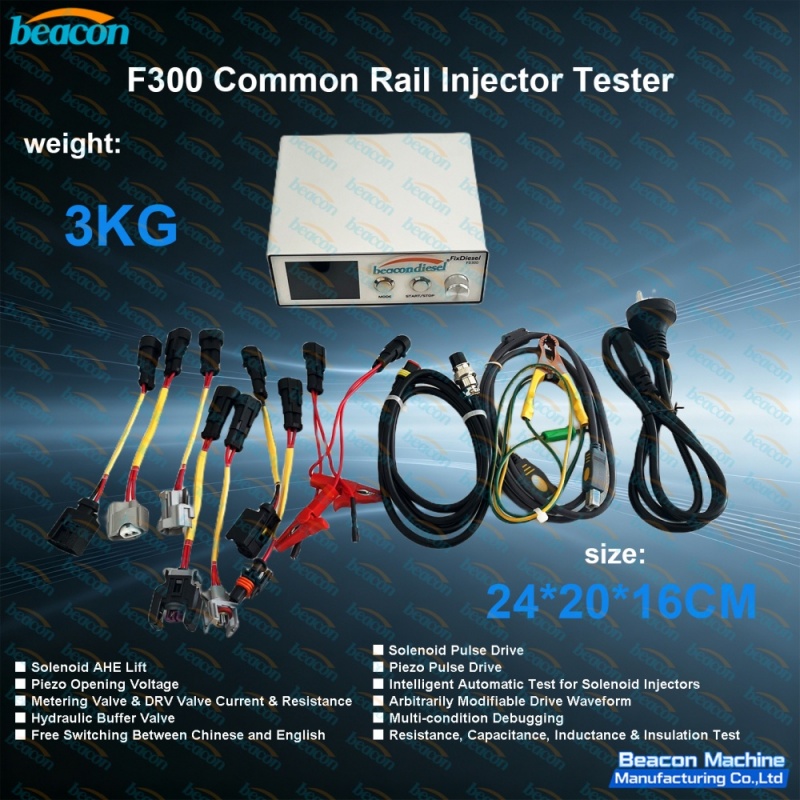
Solenoid pulse drive — actuates coil-type injectors with a controlled pulse, no fuel circuit required.
Piezo pulse drive — charges and discharges a piezo stack with a controlled profile, so piezo injectors can be operated on the bench.
Intelligent automatic test for solenoid injectors — runs the standard solenoid sequence without hand-setting parameters for every injector.
Arbitrarily modifiable drive waveform — the pulse shape can be edited for either injector type, so the control unit signal can be reproduced closely enough to expose differences between two injectors.
Multi-condition debugging — several operating conditions can be exercised in sequence, which is what makes an intermittent electrical fault show up instead of passing once and disappearing.
Resistance, capacitance, inductance and insulation test — the four electrical values that cover both families: resistance and inductance for a coil, capacitance and dynamic insulation for a piezo stack.
Solenoid AHE lift — reads armature lift on coil injectors, the travel that decides how much fuel is delivered for a given pulse.
Piezo opening voltage — shows the voltage at which a piezo injector actually starts to deliver, a direct indicator of stack condition.
Metering valve and DRV valve current and resistance — measures the current and coil resistance of the fuel metering valve and the DRV valve on the high pressure pump, so those components can be checked on the same instrument instead of a separate test.
Hydraulic buffer valve check — covers the hydraulic buffer valve in the injector control circuit, a component that affects the injection profile and is easy to overlook when only the nozzle and solenoid are examined.
Free switching between Chinese and English — the interface can be switched between the two languages at any time, which matters for workshops training new technicians or working alongside an OEM manual.
Where the F300 Fits
The F300 is the electrical layer that sits in front of a flow bench. On a typical job the technician connects the injector, selects the matching drive type, runs the automatic test or a manual pulse, reads the electrical values, edits the waveform if the response looks wrong, and checks the mechanical travel through AHE lift or piezo opening voltage. A clean electrical picture sends the injector on to the flow bench for calibration; an unclean one has already found the fault.
Because the metering valve and DRV valve can be measured on the same instrument, a high pressure pump that arrives with the injectors can be checked in the same session. That combination is common in real workshop traffic, where a vehicle comes in with a rail pressure fault and both the pump and the injectors are under suspicion.
Operation
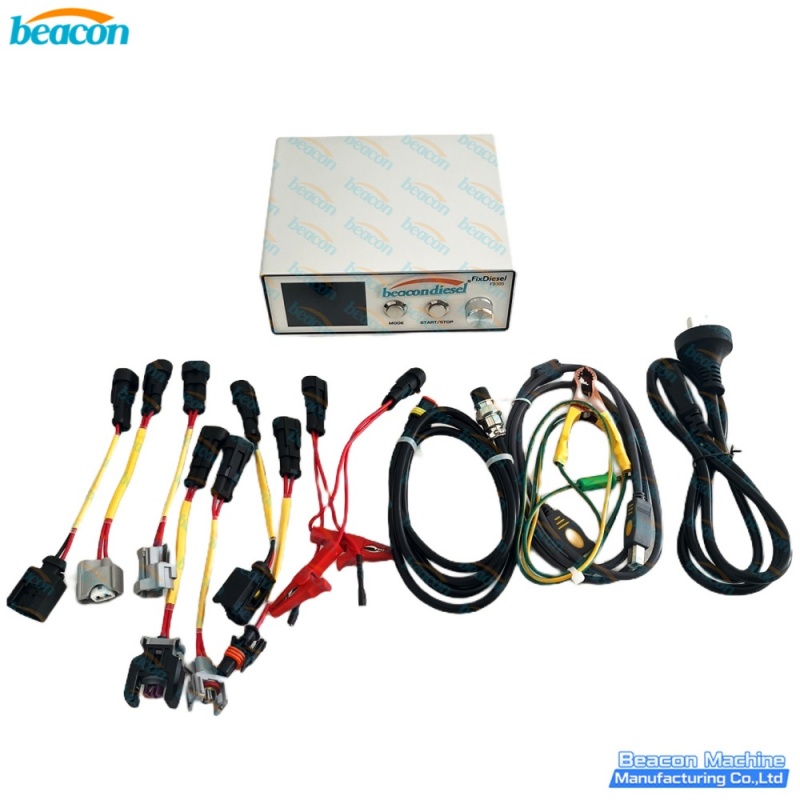
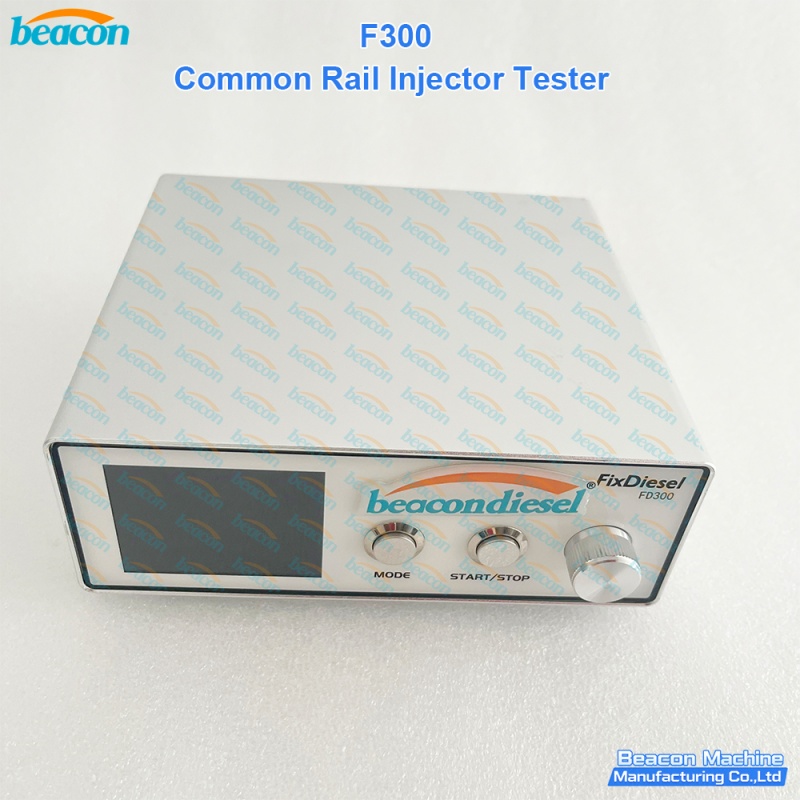
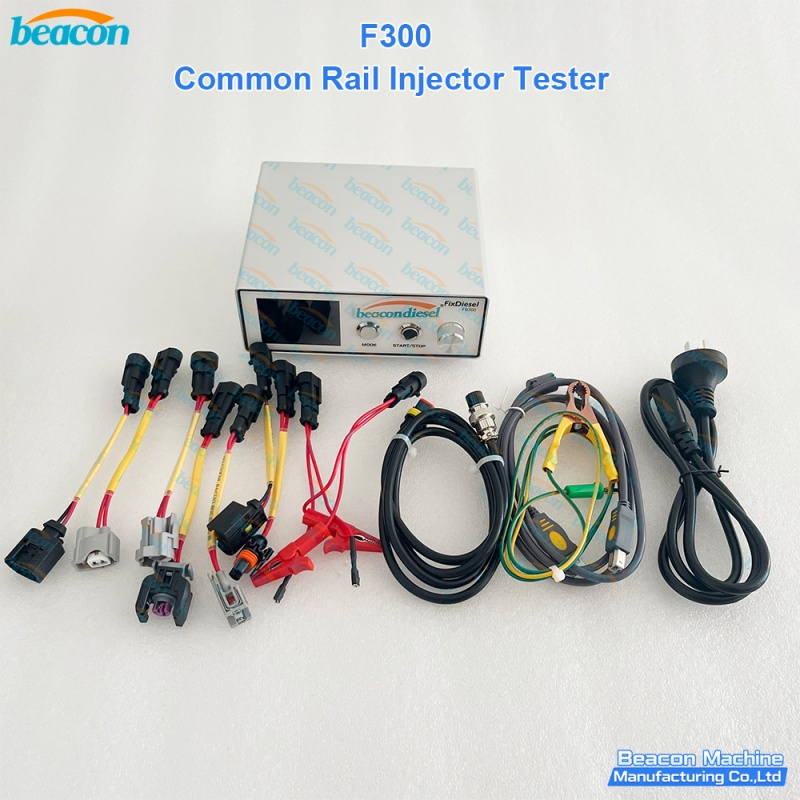
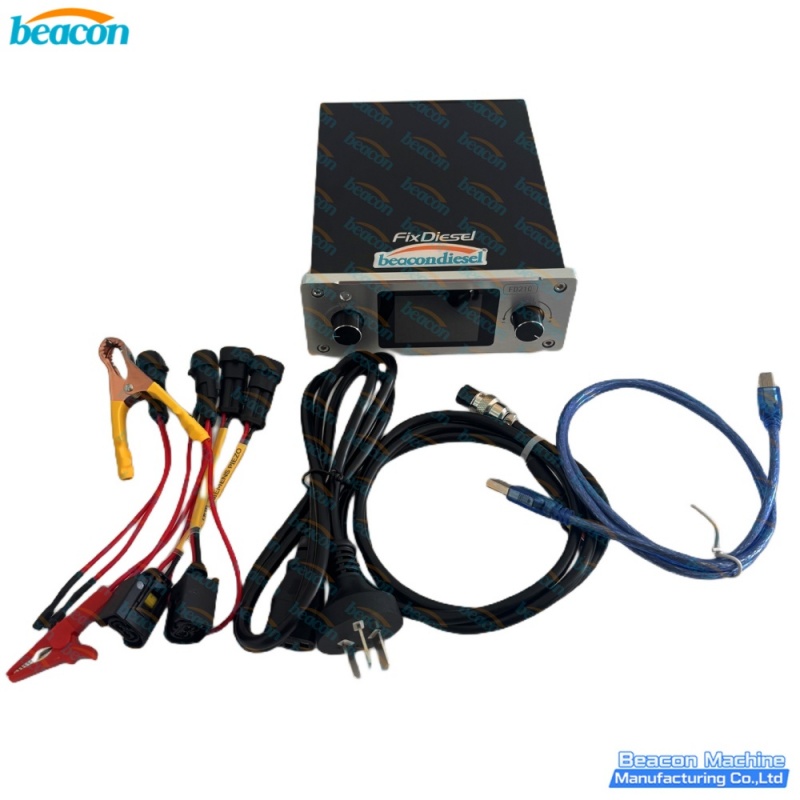
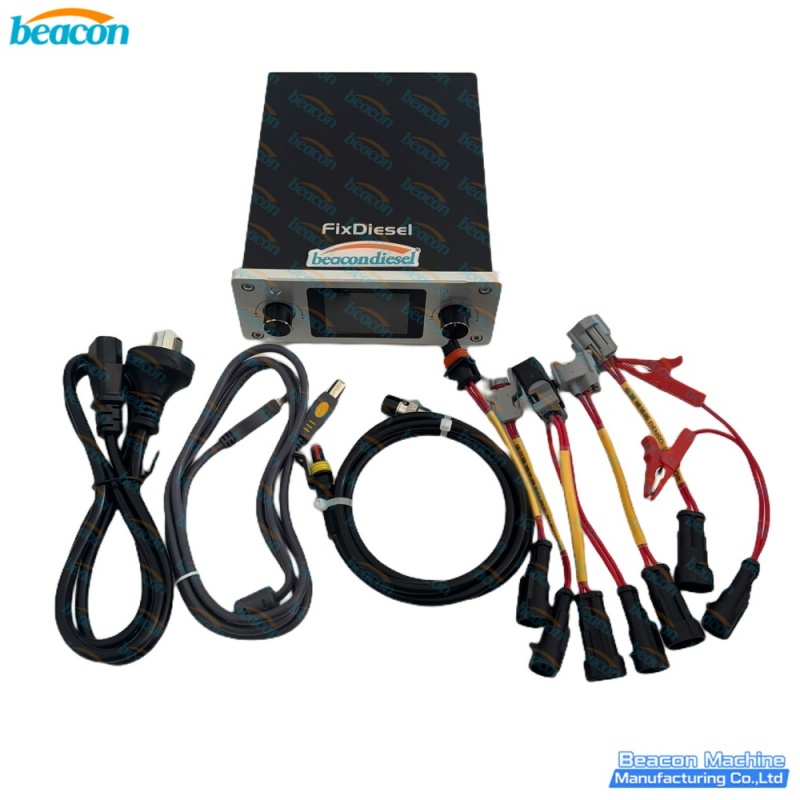
The unit is a bench-top control box with a front-panel display, MODE and START/STOP keys, an adjustment knob and a set of harness adapters for the common solenoid and piezo connector families. It runs from mains power. No fuel, high-pressure line or compressed air is involved, so it can be used on a clean bench or carried to the vehicle for a first check.
Ordering and Support
Tell us which injector families and which pump valves you service most and we will confirm the harness set that ships with the unit. For specification questions, configuration advice or spare harnesses, talk to our technical team before ordering.
About Beacon
Beacon Machine Manufacturing Co., Ltd. builds diesel fuel injection test benches, electronic testers and repair tooling for workshops in more than one hundred countries. The F300 is the combined model in the Beacon electronic instrument range, alongside the solenoid drive tester and the piezo tester used in the same workshop.
F300 Solenoid and Piezo Common Rail Injector Tester DRV Valve AHE Waveform Diagnostic Advantage
F300 Technical Notes
Practical points that come up when the F300 is put into service.
Choosing the right drive stage
The first step on any injector is deciding which family it belongs to. Coil injectors take the solenoid stage; piezo injectors take the piezo stage. Applying the wrong drive does not produce a useful reading, so the injector identity is confirmed before anything is connected.
Four values, two families
Resistance and inductance describe a coil; capacitance and insulation describe a piezo stack. The F300 measures all four, which means the same instrument serves both without the technician having to remember two different check routines.
Multi-condition debugging
Many electrical faults are intermittent and pass a single test. Running several operating conditions in sequence is what exposes them. When an injector tests clean but the vehicle still misbehaves, this is the function to use before replacing parts.
Metering valve and DRV valve
Rail pressure faults are often traced to the metering valve on the pump inlet or the DRV valve on the rail. Measuring their current and coil resistance on the same instrument as the injectors saves a separate check and keeps the diagnosis in one place.
Hydraulic buffer valve
The hydraulic buffer valve in the injector control circuit shapes the injection profile. When an injector passes the electrical checks and the flow bench but the engine still runs unevenly, this is one of the components worth checking rather than assuming the nozzle is at fault.
Bilingual interface
The interface switches freely between Chinese and English, which is useful for training and for workshops that follow an OEM manual in one language while operating in another.
Complementary equipment
The F300 is normally paired with a common rail injector test bench for flow and calibration work. Ask us which combination suits the injector and pump families you handle most.
parameter
| Model | F300 |
|---|---|
| Product Type | Solenoid and piezo common rail injector tester |
| Brand | Beacon |
| Function 1 | Solenoid pulse drive |
| Function 2 | Piezo pulse drive |
| Function 3 | Intelligent automatic test for solenoid injectors |
| Function 4 | Arbitrarily modifiable drive waveform |
| Function 5 | Multi-condition debugging |
| Function 6 | Resistance, capacitance, inductance and insulation test |
| Function 7 | Solenoid AHE lift |
| Function 8 | Piezo opening voltage |
| Function 9 | Metering valve and DRV valve current and resistance |
| Function 10 | Hydraulic buffer valve check |
| Function 11 | Free switching between Chinese and English |
| Interface | Front panel display, MODE and START/STOP keys, adjustment knob |
| Power Supply | Mains power, supplied power cord |
| Packing | Control box, power cord, adapter harness set for solenoid and piezo injectors |
Factory

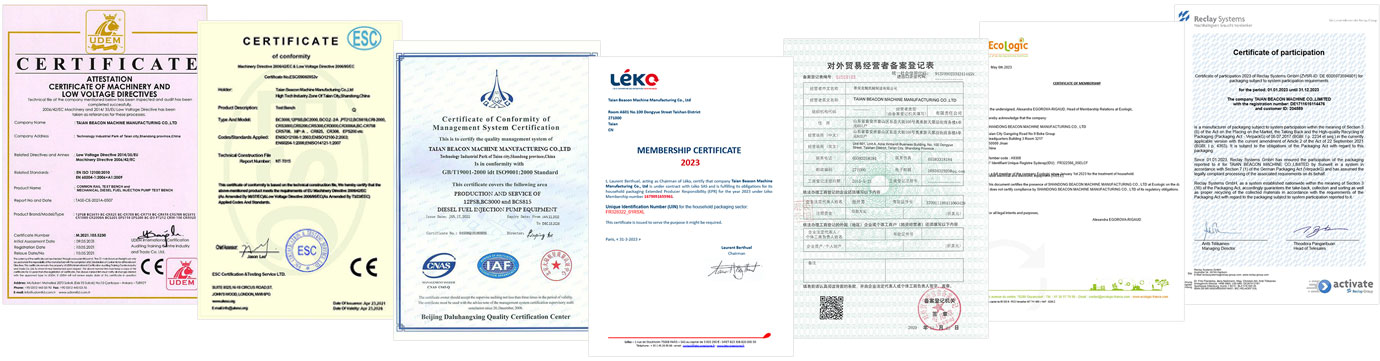
Certification
Customers

VIEWS:106 Times
 Beacon Machine Manufacturing Co.,ltd.
about beacon
PRODUCTS
contact us
TEL: 0086-18253885138
WhatsApp:+86-18253885138
Email: Janechen@beacon-machine.com
Add: High Tech Industry Zone of East Tai an city,Shandong Province,China