Language
 EN
 RU
 ES
 DE
 EL
 IT
 JA
 KO
 PT
 ID
 SR
 UK
 VI
 TH
 TR
 MS
 BE
 AR
F210 Piezo Common Rail Injector Tester Capacitance Insulation Opening Voltage Diagnostic

Click the WhatsApp button to chat, or leave a message, and we will contact you within 12 hours.
Details
F210 Piezo common rail injector Tester Capacitance Insulation Opening Voltage Diagnostic
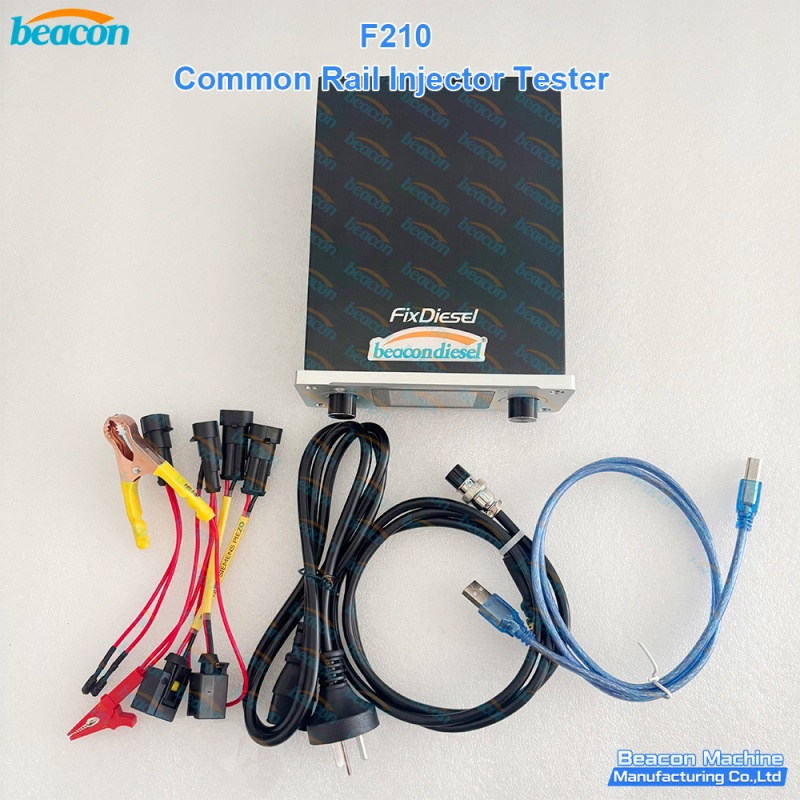
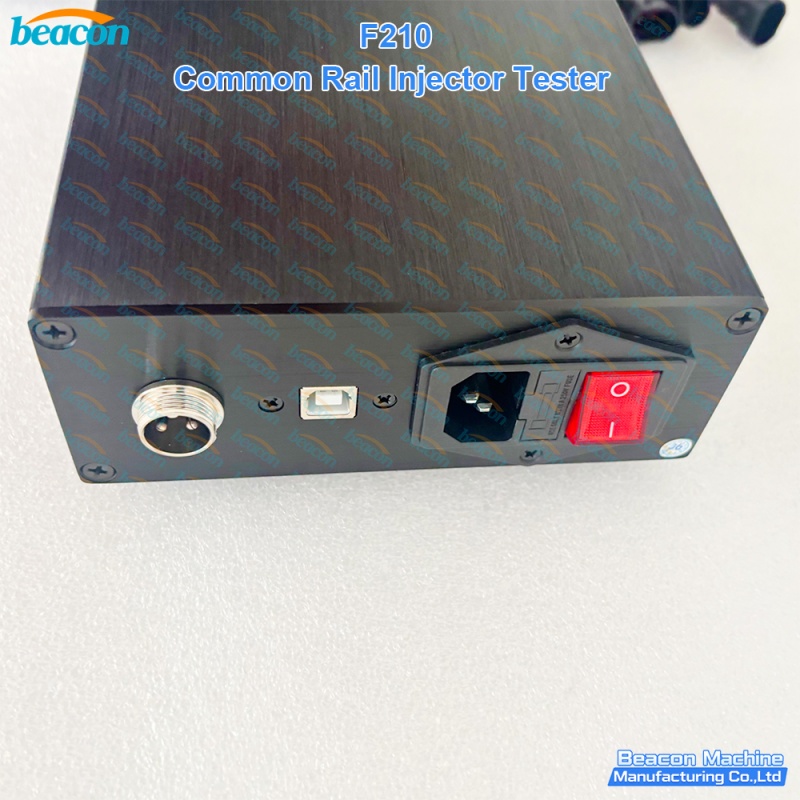


F210 Piezo Common Rail Injector Tester
The F210 is a bench-top electronic tester for piezo common rail injectors, the type fitted to most modern passenger car and light commercial diesels from Bosch, Siemens VDO, Denso and Delphi. A piezo injector is not a coil: it is a stack of ceramic layers that changes length when voltage is applied, so it cannot be judged with the resistance and inductance checks used on solenoid injectors. The F210 is built around the measurements that actually apply to a piezo stack, and it drives the injector with a pulse profile that matches the real control signal closely enough for the stack response to be observed.
What the F210 Measures
Six functions cover the electrical side of piezo injector diagnosis.
Piezo pulse drive — charges and discharges the piezo stack with a controlled pulse, so the injector can be actuated on the bench without a fuel circuit.
Arbitrarily modifiable drive waveform — the pulse shape, charge slope and hold level can be edited freely. That matters on piezo injectors because the stack response depends heavily on how the voltage is applied, not only on the peak value.
Capacitance test — the capacitance of the piezo stack is its primary health indicator. A stack with cracked or delaminated layers reads low; a shorted stack reads far out of range. Capacitance is the first number to look at on any piezo injector.
Dynamic resistance and current — measured while the injector is being driven, so the reading reflects the stack in operation rather than a static multimeter value.
Dynamic insulation test — checks insulation resistance under drive conditions, which is where a failing piezo stack usually reveals itself before it fails completely.
Piezo opening voltage — shows the voltage at which the injector actually starts to deliver, a direct indicator of stack condition and of the lift available.
Why Piezo Needs Its Own Tester
Many workshops try to check piezo injectors with a solenoid tester and get a misleading answer. A solenoid tester looks for a coil of a few ohms and a magnetic field; a piezo stack looks like a capacitor of a few microfarads and produces no magnetic field at all. Reading a piezo injector with solenoid test equipment tells you almost nothing, and reading it with a plain multimeter tells you even less because the stack only behaves characteristically under charge.
The F210 addresses that directly. Capacitance, dynamic insulation and opening voltage together describe the state of the stack, and comparing a suspect injector against a known-good one of the same part number on the same drive waveform is usually enough to separate a failed injector from a fuelling problem elsewhere in the engine.
Use in the Workshop
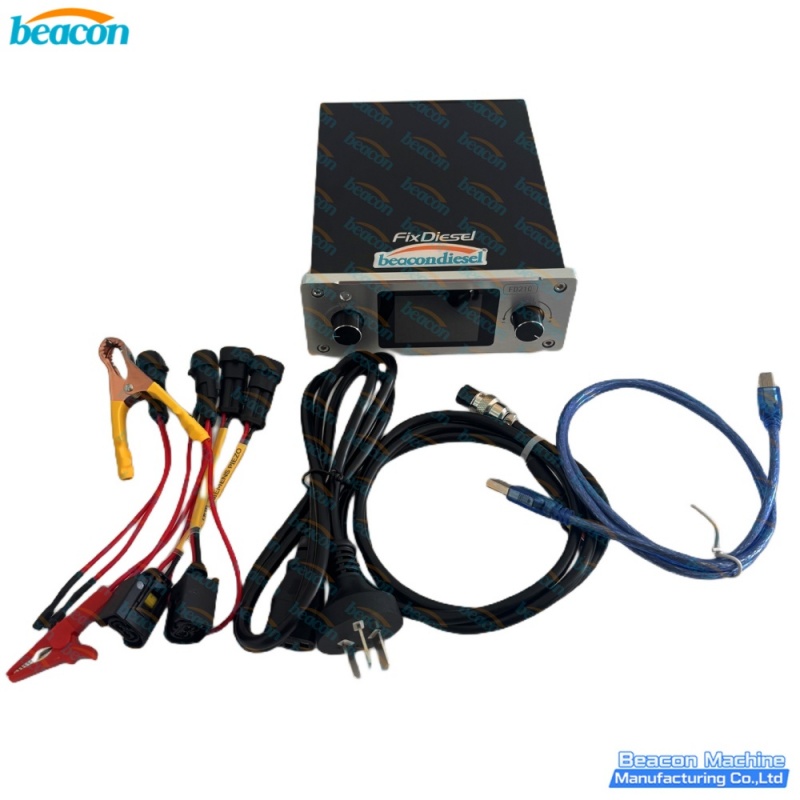
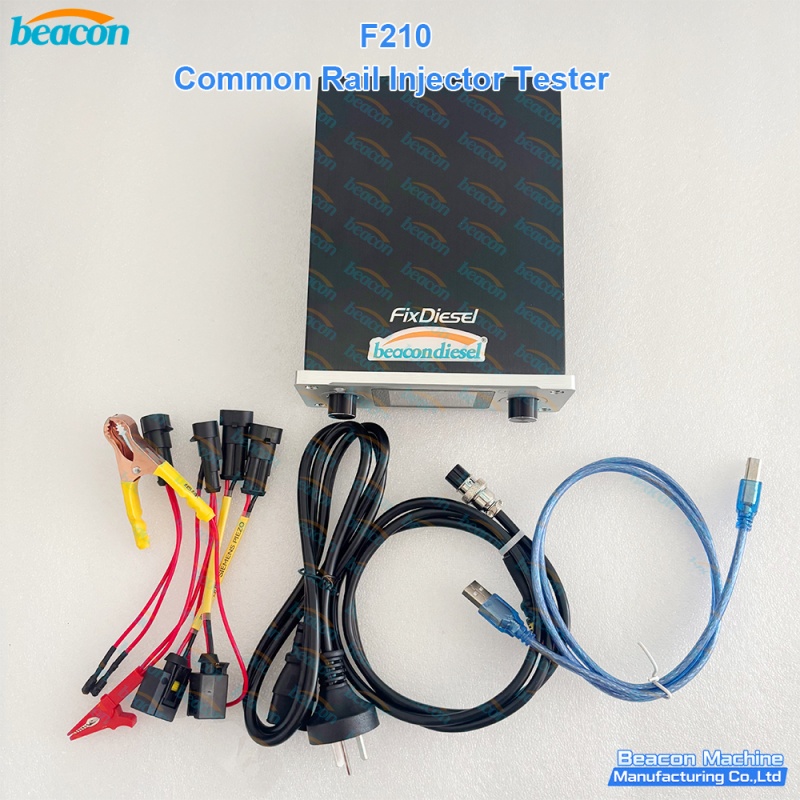
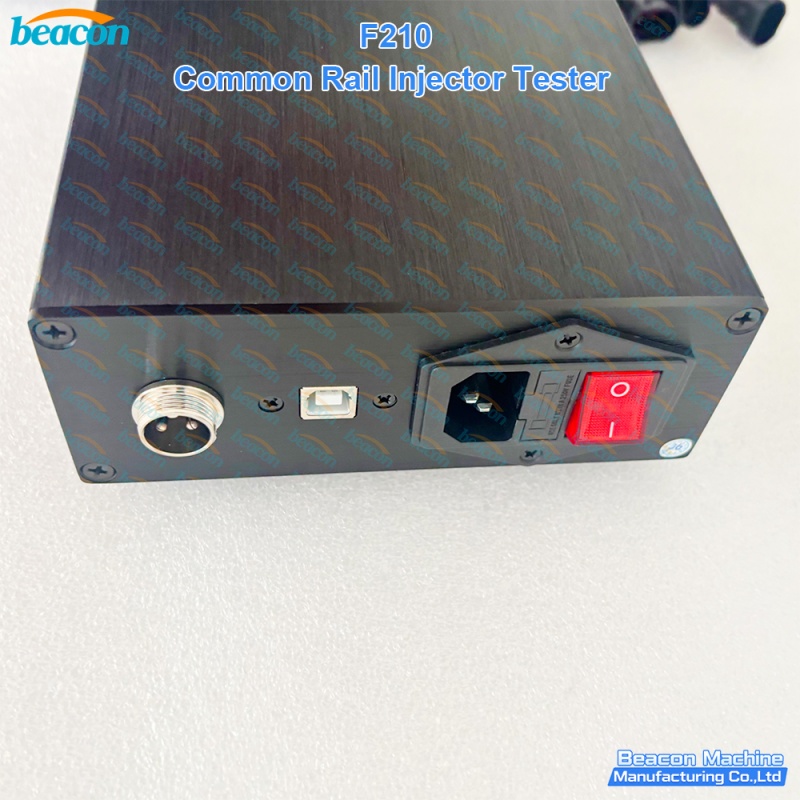
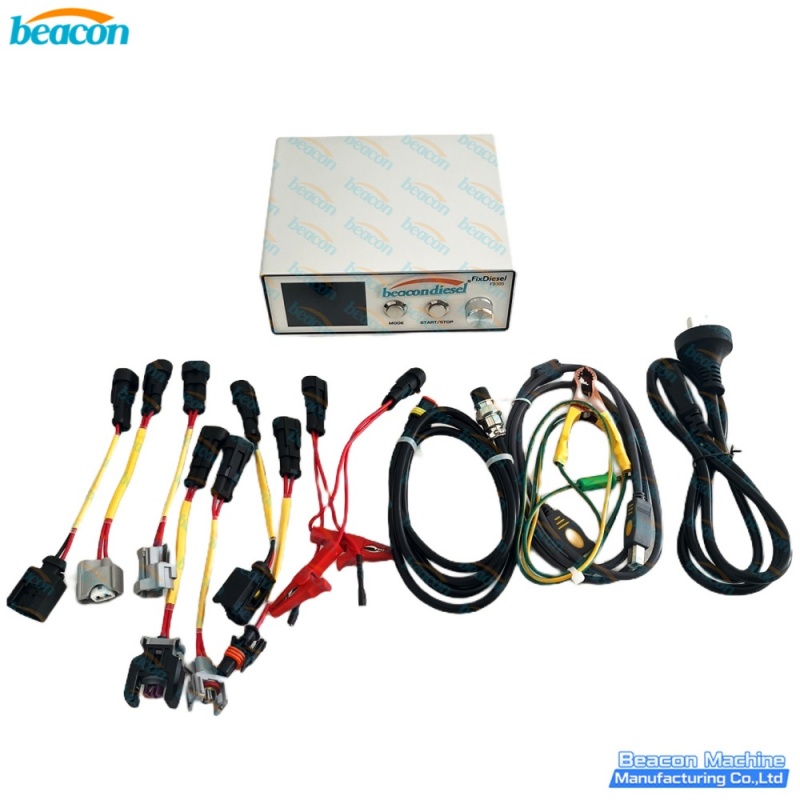
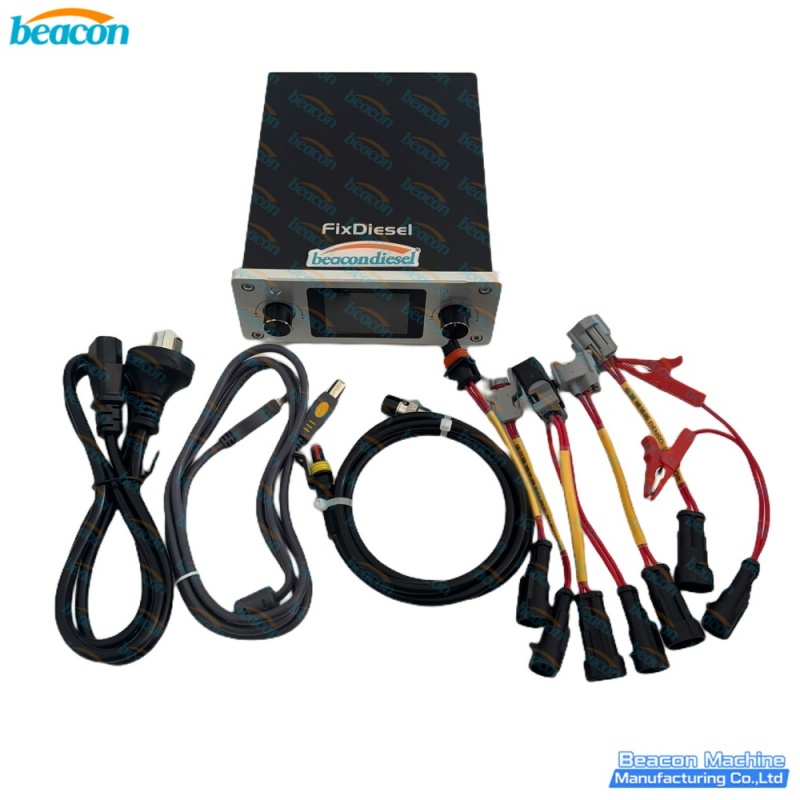
The unit is a bench-top control box with a front-panel display, two adjustment knobs, a power inlet and a USB port, supplied with a harness set for the common piezo injector connector families. It runs from mains power. As with the solenoid-side instrument, no fuel, high-pressure line or compressed air is involved, so it can sit on a clean bench or be carried to the vehicle for a first check.
In a typical workflow the technician connects the injector, runs the piezo drive, reads capacitance and dynamic insulation, then checks opening voltage. If those three are in range the injector goes on to the flow bench for calibration. If not, the fault is already localised, and no bench time or test oil has been spent finding it.
Ordering and Support
Tell us which piezo injector families you service most — Bosch, Siemens VDO, Denso or Delphi — and we will confirm the harness set that ships with the unit. For specification questions, configuration advice or spare harnesses, talk to our technical team before ordering.
About Beacon
Beacon Machine Manufacturing Co., Ltd. builds diesel fuel injection test benches, electronic testers and repair tooling for workshops in more than one hundred countries. The F210 belongs to the Beacon electronic instrument range, alongside the common rail injector testers, stroke measuring equipment and solenoid drive testers used in the same workshop.
F210 Piezo Common Rail Injector Tester Capacitance Insulation Opening Voltage Diagnostic Advantage
F210 Technical Notes
Practical points that come up when the F210 is put into service.
Piezo injectors only
The F210 is built for piezo common rail injectors. It is not a solenoid tester: it does not measure coil resistance or inductance, and it should not be used to judge a solenoid injector. Workshops that service both types normally keep a solenoid tester and a piezo tester side by side.
Capacitance is the key number
On a piezo injector the capacitance of the stack is the single most useful electrical value. It falls as layers crack or delaminate and it moves far out of range when the stack shorts. Resistance measured with a multimeter will look open on a healthy piezo injector, which is exactly why capacitance has to be measured instead.
Why dynamic insulation matters
Insulation faults in a piezo stack often appear only under voltage. A static insulation check can pass an injector that breaks down as soon as it is driven. Measuring insulation while the stack is charging is what exposes that condition before it becomes a hard failure.
Opening voltage as a condition indicator
The voltage at which the injector begins to deliver reflects the state of the stack and the mechanical travel available. Tracking it on injectors that return for service shows the trend before a no-start or a misfire complaint appears.
Waveform editing on piezo
Because the stack responds to the charge profile and not only to the peak voltage, editing the waveform lets the technician reproduce the control unit signal more faithfully. Two injectors of the same part number then behave comparably, and real differences stop being masked by a fixed test pulse.
Complementary equipment
The F210 is normally paired with a common rail injector test bench for flow and calibration work, and with a solenoid-side tester when the workshop handles both injector families. Ask us which combination suits the engines you see most.
parameter
| Model | F210 |
|---|---|
| Product Type | Piezo common rail injector tester |
| Brand | Beacon |
| Function 1 | Piezo pulse drive |
| Function 2 | Arbitrarily modifiable drive waveform |
| Function 3 | Capacitance test |
| Function 4 | Dynamic resistance and current |
| Function 5 | Dynamic insulation test |
| Function 6 | Piezo opening voltage |
| Interface | Front panel display, adjustment knobs, USB port |
| Power Supply | Mains power, supplied power cord |
| Packing | Control box, power cord, USB cable, injector adapter harness set |
Factory

Certification

Customers

VIEWS:107 Times
 Beacon Machine Manufacturing Co.,ltd.
about beacon
PRODUCTS
contact us
TEL: 0086-18253885138
WhatsApp:+86-18253885138
Email: Janechen@beacon-machine.com
Add: High Tech Industry Zone of East Tai an city,Shandong Province,China