Language
 EN
 RU
 ES
 DE
 EL
 IT
 JA
 KO
 PT
 ID
 SR
 UK
 VI
 TH
 TR
 MS
 BE
 AR
Cummins XPI Injector Guide: ISX15 and X15 Testing & Repair
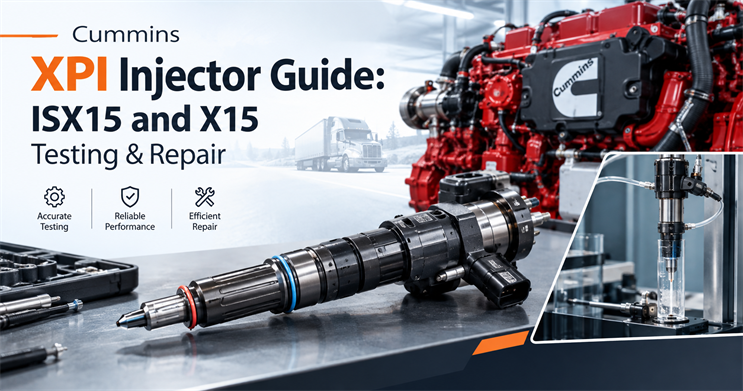
Cummins XPI Injector Guide: ISX15 and X15 Testing & Repair
Cummins has run four generations of fuel injection on its heavy-duty engines: mechanical PT, electronically controlled CELECT, high pressure injection HPI, and now XPI common rail. Each generation failed in its own way, and each generation needs its own test approach. This guide covers the fourth one — XPI — which the workshops we work with see on ISX15 and X15 engines. If your shop services these trucks and needs the right bench for the job, our team can help you specify it: talk to our engineers on WhatsApp.
Where XPI Sits in the Cummins Line-Up
The shift to XPI happened around the CM871 to CM2250 transition. Before it, HPI systems used a high pressure pump feeding unit injectors driven off the camshaft, at pressures around the 2,000 bar class. XPI changed the architecture: fuel is pressurised independently of injection timing, stored in a common rail, and delivered electronically to each injector. Pressure capability moved up to roughly 2,600 bar, and the engine went from dual cam to single cam.
That architectural change is the reason a shop cannot treat an XPI injector like an HPI injector. There is no camshaft lobe setting to argue with, no plunger preload to adjust at the engine. The injector is a solenoid valve on a pressure reservoir and it either meters correctly under pressure or it does not.
XPI and HPI: The Differences That Matter on the Bench
| Feature | HPI | XPI |
|---|---|---|
| Architecture | Unit injector, camshaft driven | Common rail, hydraulically pressurised |
| Camshaft | Dual cam | Single cam |
| Pressure source | Integral plunger per injector | High pressure pump feeding a rail |
| Injection control | Rocker and plunger plus solenoid | Solenoid valve only |
| Typical pressure | Around 2,000 bar class | Up to roughly 2,600 bar |
| Bench type | EUI/EUP bench with cam box | Common rail injector bench |
The practical consequence: an XPI injector is tested as a common rail injector. It does not need a cam box, and it cannot be tested on a mechanical pump bench. It needs rail pressure, a drive signal and a measurement of delivered quantity and return flow.
Structure and Identification
An XPI injector is a slim solenoid injector with a high pressure inlet at the top, a leak-off return, and a nozzle assembly at the tip. The solenoid sits on top of the injector body and commands the control valve that starts and ends injection. Because the rail holds pressure continuously, the control valve is what isolates the nozzle between events — which is exactly why internal leakage is such a common failure on this platform.
Identification is by part number on the body. The numbers that come through our workshop most often are 2872405, 2894920 and 2897320, plus the 5579415 and 5579419 exchange numbers. Do not identify an XPI injector by its external shape or by the engine model alone: the CM platform determines the injector, not the engine name. A CM871 engine and a CM2250 engine are both called ISX15 but they do not share injectors, because the first is HPI and the second is XPI.
For any part number you are unsure about, send us the number and the engine serial prefix before you quote the job. Looking up the number is faster than pulling the wrong injector and eating the freight both ways.
The Failures Workshops Actually See
Rail pressure instability
The single most reported symptom. Actual rail pressure drifts below command under load, and the ECM responds by extending injection duration, which raises exhaust temperature and derates the engine. On an XPI system this is usually the injector leaking internally rather than the pump failing, because the pump has no way to know the injector is losing fuel downstream.
Injector sticking or seizure
Control valve sticking produces a hard start, a misfire on one cylinder, or a sudden power loss. Unlike the gradual degradation of a mechanical injector, this failure can arrive almost without warning. Water and fine debris are the usual culprits: at 2,600 bar the clearances are unforgiving, and a particle that a mechanical injector would shrug off will score a control valve seat.
Nozzle coking and spray pattern loss
Slow build-up on the nozzle tip changes the spray shape, which shows up as smoke, poor fuel economy and elevated exhaust temperature before it shows up as a fault code. This is the failure mode a bench catches earliest, because you can see the pattern and the quantity long before the driver complains.
Excess leak-off
A worn control valve or scored body leaks more fuel back to tank than the specification allows. Return flow testing is the cheapest diagnostic in the book on these injectors and the one most often skipped.
Test Bench Setup for XPI Work
XPI injectors are tested on a common rail injector bench with common rail pump capability. The bench must be able to hold stable rail pressure across the full working range, drive the solenoid, and measure both delivered quantity and return flow per injector. Models in our range that cover this work:
| Model | Positioning |
|---|---|
| CR919 | Full-function bench; covers common rail injectors and pumps plus EUI/EUP and HEUI work |
| CR917S | High pressure rail bench with 250 MPa rail pressure and QR coding |
| CR1029 | Comprehensive performance bench for injectors and pumps |
| CR1016 | Common rail injector and fuel pump bench for a working shop |
| CR1017-PLUS | Injector and pump bench with coding capability for workshop use |
| CR819 | Common rail injector and pump bench, also covers HEUI |
Two points worth settling before you buy. First, adapters and high pressure lines are not universal: the XPI injector inlet and leak-off connections differ from Bosch and Denso patterns and must be specified with the bench. Second, if you also service the Scania version of this injector family, say so up front, because the clamping and connection details differ between the Cummins and Scania variants even where the internal parts overlap. Our engineers can confirm both points against your exact part numbers: send the list on WhatsApp.
Test and Repair Workflow
Clean the injector externally before it goes anywhere near the bench. Contamination is the failure cause on this platform, and putting a dirty injector on a clean bench contaminates the bench.
Record return flow before anything else. Low return flow with a no-start points one way; high return flow with a rough idle points another. Establish the baseline first.
Run the test points at the pressures the engine actually uses. Idle, part load and full load rail pressure, not just a single point, because a control valve can be acceptable at low pressure and leak badly at high pressure.
Inspect the spray pattern and the quantity spread across the set. A set that is individually inside tolerance but spread widely will still idle rough.
Strip and assess before deciding on repair or replacement. Nozzle assemblies and control valves are replaceable; a scored body or a damaged solenoid is usually the end of the injector.
Retest the finished injector against the same test points. The only proof that a repair worked is a before-and-after on the same bench with the same settings.
A diagnostic note that saves shops a lot of injectors: before condemning a set, rule out the upstream causes. A restricted filter, a failing lift pump or a pressure relief valve that has opened once will all produce the same low rail pressure complaint. Replacing injectors without fixing the upstream cause simply buys the same failure again.
Frequently Asked Questions
Can I test XPI injectors on a mechanical pump bench?
No. An XPI injector is a common rail injector and needs rail pressure, a solenoid drive signal and quantity plus return flow measurement. A mechanical pump bench cannot supply any of those conditions, which is also why the mechanical Euro II benches and the XPI injector have nothing in common on the test side.
Do I need a cam box for XPI?
No. The cam box is for EUI and EUP unit injectors, where the camshaft drives the plunger. XPI is a common rail system and the pressure comes from the pump, so a cam box is irrelevant to it. This is one of the few clean dividing lines in diesel injection testing and worth remembering when you are comparing bench specifications.
How much rail pressure does an XPI bench need?
Enough to reach the upper end of the engine's working range, because the failures that matter appear at high pressure. A bench that stalls in the middle of the range will pass injectors that the truck then rejects. Check the bench's rail pressure capability against the highest pressure the engine commands, not against a typical test value.
One injector failed. Should I test the whole set?
Yes. XPI injectors wear as a set because they all see the same fuel, the same rail and the same duty cycle. Testing the set tells you whether you are looking at one bad injector or a fuel quality problem that is about to take out the other five, and the second case is the one that generates the comeback.
About Beacon Machines
Beacon Machines builds diesel fuel injection test equipment for workshops, rebuilders and distributors. Our range covers common rail injector and pump benches, EUI/EUP and HEUI testing, mechanical pump calibration, and the tooling and adapters that go with them. We work with buyers who need the specification matched to the job rather than a generic catalogue line, and we support installed machines with parts and technical guidance after delivery. If you are setting up XPI capability or adding it to an existing bench, message us on WhatsApp with your part numbers and engine models and we will come back with a concrete configuration.
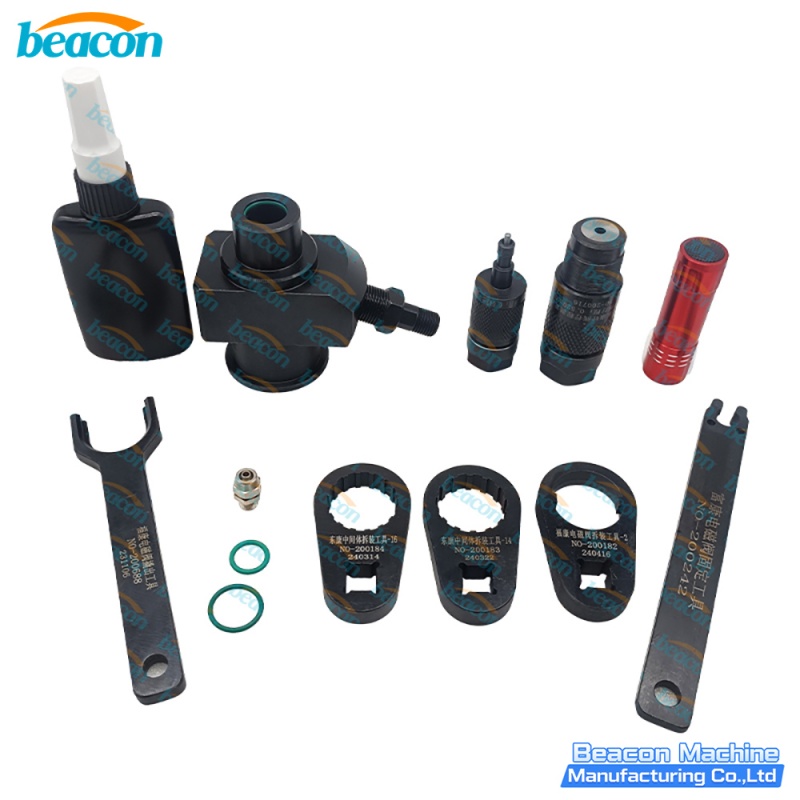
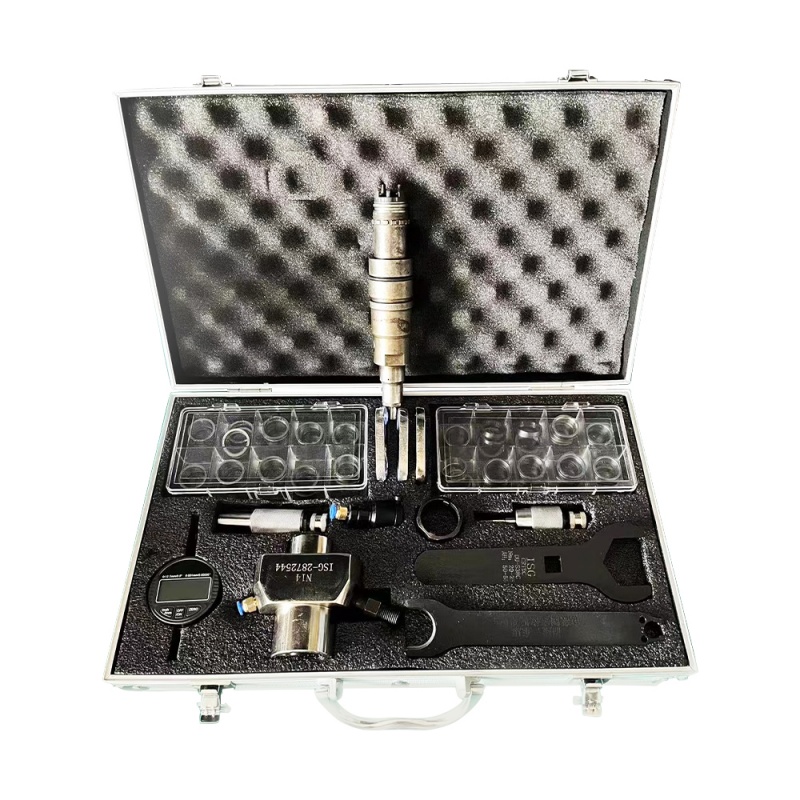
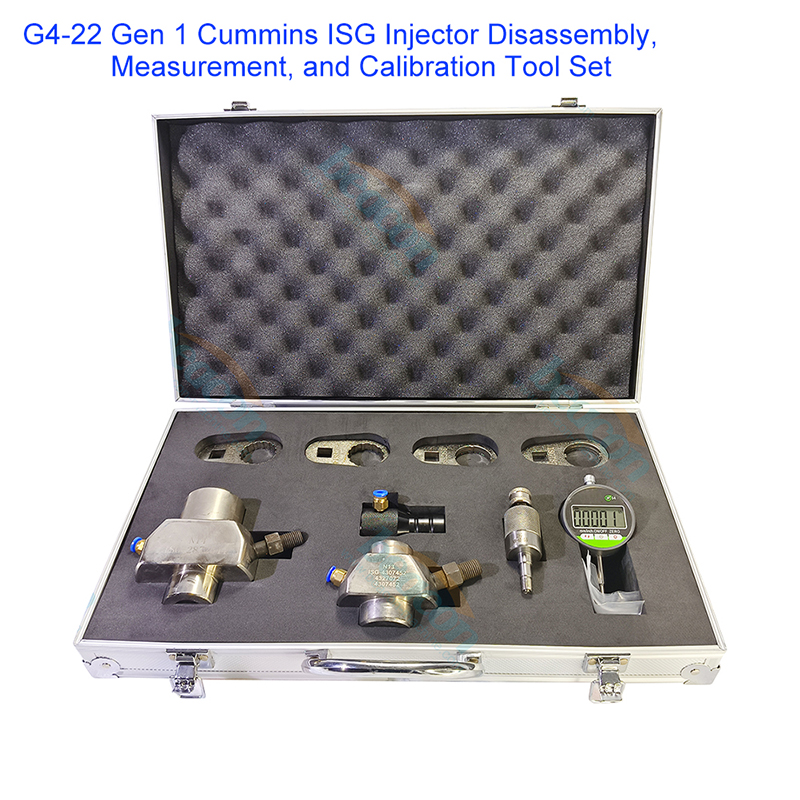
 Beacon Machine Manufacturing Co.,ltd.
about beacon
PRODUCTS
contact us
TEL: 0086-18253885138
WhatsApp:+86-18253885138
Email: Janechen@beacon-machine.com
Add: High Tech Industry Zone of East Tai an city,Shandong Province,China