Language
  EN
EN RU
RU ES
ES DE
DE EL
EL IT
IT JA
JA KO
KO PT
PT ID
ID SR
SR UK
UK VI
VI TH
TH TR
TR MS
MS BE
BE AR
AR5 Signs of a Restricted High-Pressure Fuel Feed in Common Rail Diesel Systems
Why "Restricted HP Feed" Is the Most Mis-Diagnosed Common Rail Fault
When a modern common rail diesel loses power, misfires under load, or throws intermittent rail-pressure codes, most technicians reach for the injectors first. In practice, a restricted high-pressure fuel feed between the CP pump and the rail — caused by a partially blocked suction-side strainer, a tired inlet metering valve, or a crimped/damaged supply line — can mimic an injector failure almost perfectly. The injector you replace was never the problem.
This article walks through the five unmistakable bench-and-shop signs of a restricted HP feed and a corrective diagnostic path you can run on a test bench without disassembling the engine. Numbers below are conservative; always cross-check against your specific injector datasheet.
Sign 1 — Rail Pressure Builds Slowly, or Only Under Load
A healthy CP1 / CP3 / CP4 pump can reach ~250 bar idle and ~1350-1600 bar at full load within roughly 1-2 seconds of cranking. If rail pressure climbs sluggishly and settles 100-200 bar below target at idle, but recovers at higher RPM, the metering unit is being asked to compensate for an upstream restriction. The pump is fine; something between the tank and the pump head is choking the suction side.
Sign 2 — Repeated Pressure-Decay Cliffs in the 1500-1800 bar Range
When you ramp a test bench to its peak and watch the rail-pressure trace, a clean system holds a flat plateau. A restricted feed shows a sharp decay cliff as the injectors begin firing — rail pressure suddenly drops because the pump cannot replenish fast enough to maintain target. The threshold where the cliff starts is often near the pressure-relief-valve (PRV) opening point (~1500-1800 bar), which makes the symptom easy to miss if you only look at the holding pressure, not the slope.
Sign 3 — Back-Leak Quantity Inflates ONLY on One Bank
If you measure back-leak from each injector individually, a healthy set on a worn engine might return 2-10 ml/min per cylinder. A restricted feed elevates back-leak globally on every cylinder of that bank, not on a single injector. So when the test bench shows borderline back-leak on all six cylinders of a V6, and only the V6 side showed codes, the feed on that bank is the suspect — replace the strainer, not the injectors.
Sign 4 — Pressure Spike When the Primer is Manually Cycled
Disconnect the suction line at the pump head and connect a hand primer. A few manual strokes should produce an immediate, sharp pressure jump on a gauge. If the response is sluggish or the pressure only creeps up after 10+ strokes, the restriction is between the tank pick-up and the pump inlet — typically the in-tank pre-filter or the coarse strainer.
Sign 5 — Vacuum on the Suction Line During WOT
Install a T-fitting with a vacuum gauge (or use a manometer) in the suction hose right before the CP pump. At wide-open throttle, the gauge should read 0 to slightly negative (≈ -0.3 bar). A reading below -0.7 bar means the pump is fighting to pull fuel through a restriction. This test catches what most pressure-side diagnostics miss — restriction on the low-pressure side never shows up in rail-pressure data alone.
Diagnostic Path You Can Run Today
Bench-test the injectors and verify back-leak per cylinder. If all cylinders on a bank are elevated, move to step 2 instead of condemning injectors.
Verify suction-side vacuum. If it drops below -0.7 bar at WOT, the restriction is on the inlet side.
Manually cycle the primer at the pump head. Sluggish response = upstream strainer or pre-filter.
Pull and inspect the in-tank pre-filter and the pump's inlet strainer. Replace if debris is visible.
Re-bench the rail pressure-rise curve before and after the filter swap. The curve should rebound to spec — confirming the feed, not the pump or injectors, was the root cause.
Why This Matters
Replacing six injectors on a V6 to "fix" a rail-pressure code can cost upwards of USD 2,400 in parts and labor. A 20-minute strainer swap costs a fraction of that and resolves the same drivability complaint. Running this diagnostic sequence first protects your shop from unnecessary comebacks and keeps warranty claims clean.
About Beacon Machine
Beacon Machine supplies common rail test benches and injector diagnostic tools to workshops and OEMs in 60+ countries. Our test benches include rail-pressure curve graphing, per-cylinder back-leak measurement, and PRV test routines — everything you need to catch a restricted HP feed on the first visit. Visit our Common Rail Test Bench product series for full specifications.
Related products
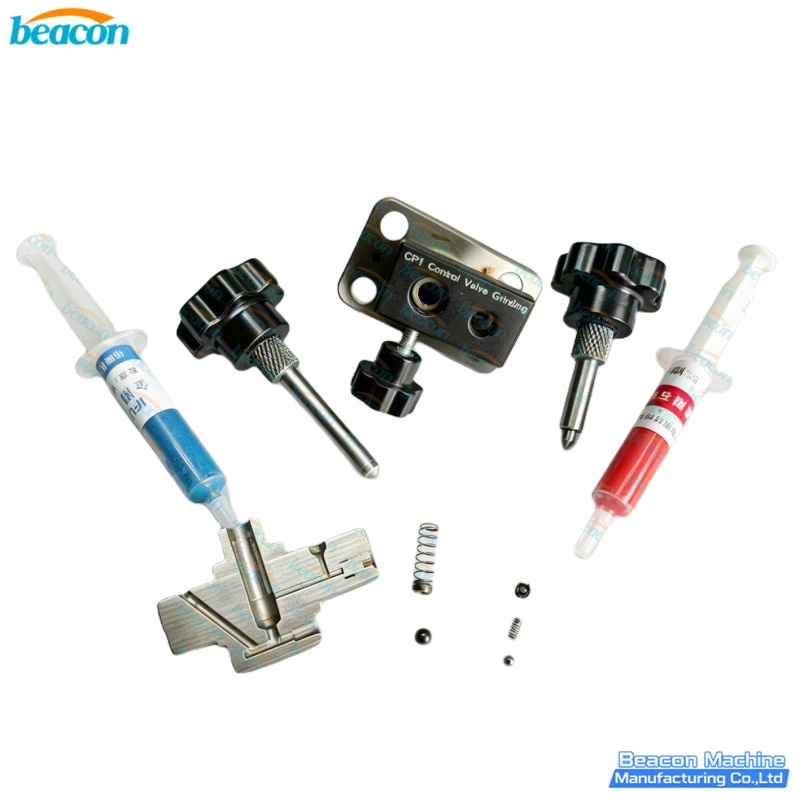
G4-107 CP1 Pump Plunger Lapping Tool
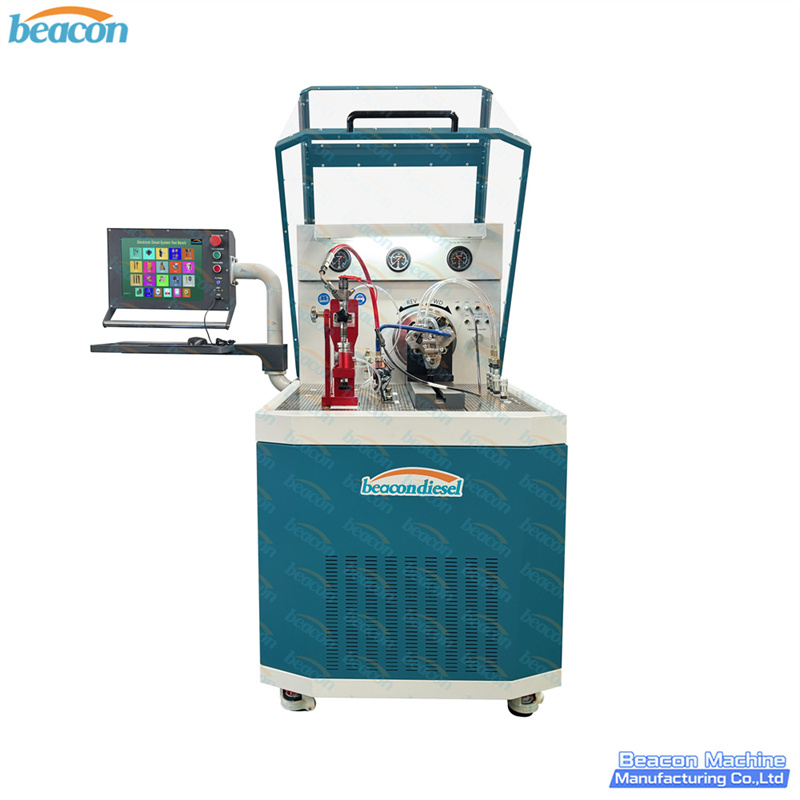
BC810 Common Rail Injector and Pump Test Bench for Diesel Car Engine Systems
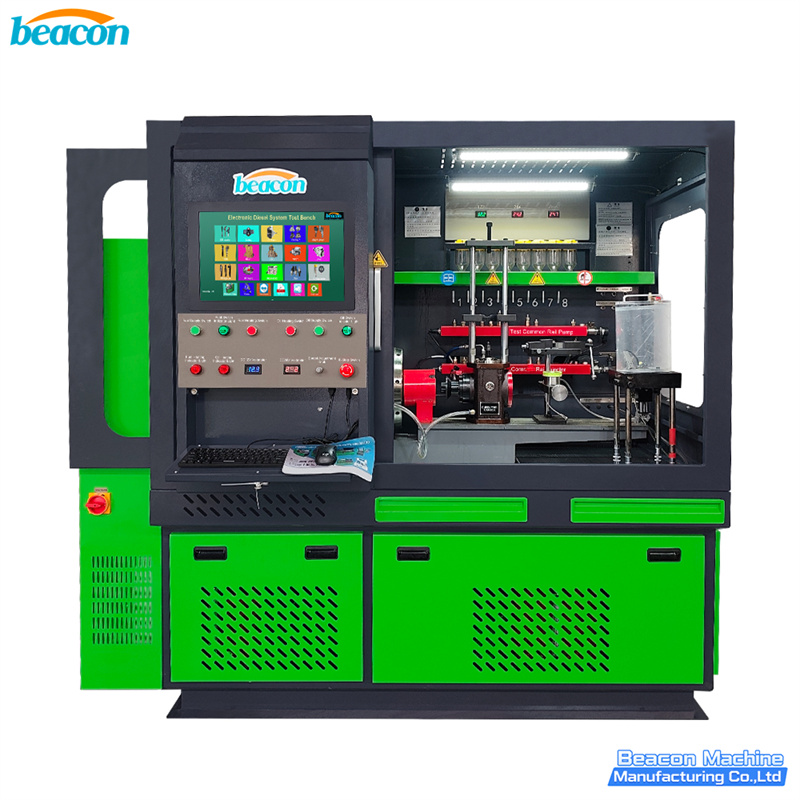
CR910 High Pressure Common Rail Comprehensive Performance Test Bench
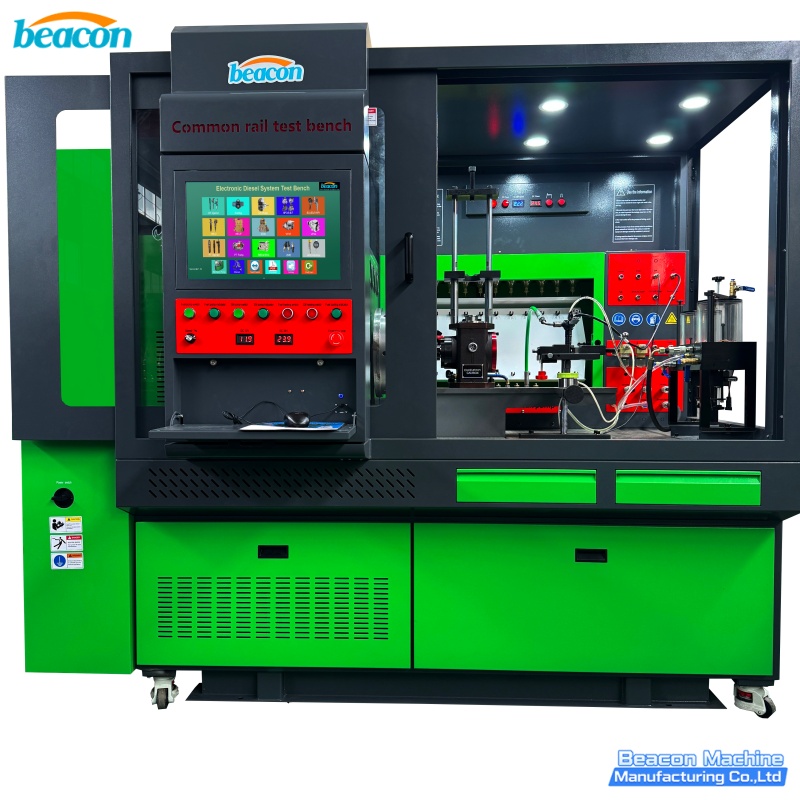
CR919PLUS High Pressure Common Rail Comprehensive Performance Test Bench

G4-106 DAF F2P Smart Injector Disassembly Tool

Beacon Eight-Station Common Rail Injector Endurance Test Bench for Long Duration Quality Validation
 Beacon Machine Manufacturing Co.,ltd.
 about beacon
PRODUCTS
contact us
TEL: 0086-18253885138
WhatsApp:+86-18253885138
Email: Janechen@beacon-machine.com
Add: High Tech Industry Zone of East Tai an city,Shandong Province,China